Source 20kv latex insulated gloves for electrical work, maintenance, and repair
Compare 30 listings for 20kv latex insulated gloves from verified suppliers. Buyers can review specifications like voltage rating, material, and packaging options to find suitable protective gear for electrical tasks.
Key considerations
Products List






Comprehensive Sourcing Guide
Strategic Sourcing Guide for 20kV Latex Insulated Gloves
Procuring high-voltage protective equipment requires a rigorous approach that balances technical performance, regulatory compliance, and supply chain reliability. The core keyword "20kV latex insulated gloves" points to a specific class of Personal Protective Equipment (PPE) designed for electrical utility work. Buyers must navigate a market where product attributes vary significantly between medical-grade disposable items and industrial-grade insulating gear. This guide outlines the critical factors for sourcing these specialized gloves, ensuring that procurement decisions are grounded in verifiable facts and industry standards rather than marketing assertions.
Technical Specifications and Material Composition
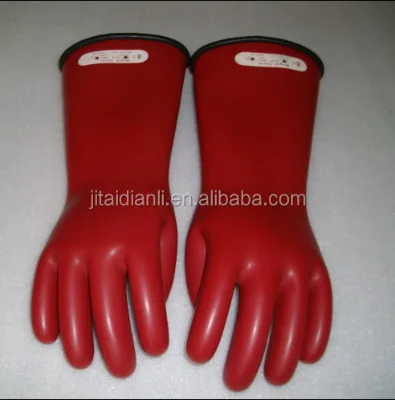
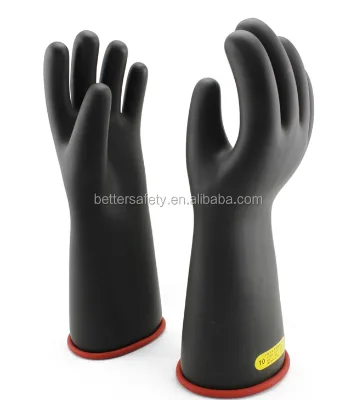
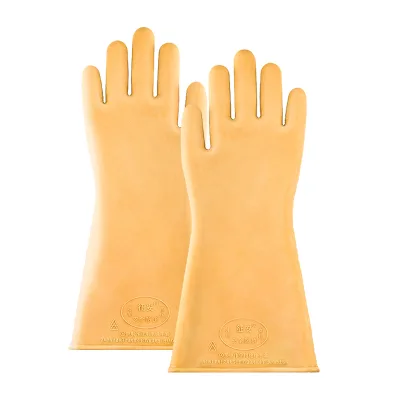
The foundation of any sourcing decision lies in the precise technical specifications of the product. For gloves rated at 20kV, the material composition is paramount. The supplied data indicates that "Electrical Latex Rubber Insulating Gloves" are available, with specific references to "Latex" and "Rubber" as outer materials. It is crucial to distinguish between general rubber gloves and those specifically engineered for electrical insulation. The product model "IG-17-class 2/20KV" explicitly links a specific model number to the 20kV rating, suggesting that not all latex gloves in the market carry this classification.
Buyers must verify the thickness and cuff design, as these directly impact safety and usability. The observed specifications include "Thickened" variants and "Straight Cuff" types, with some listings noting "Tight" cuff tightness to ensure a secure fit against the wrist. The length is generally described as "Long," which is a standard requirement for high-voltage work to prevent exposure of the arm. Additionally, the product model "IG-41" and "IG-72" appear in the data, indicating a range of models that may differ in voltage rating or physical dimensions. When evaluating a supplier, the buyer must confirm that the specific model number corresponds to the 20kV requirement, as models like "IG-22" or "IG-43" may serve different voltage classes.
Compliance, Certification, and Voltage Verification
Compliance with international safety standards is non-negotiable for electrical gloves. While the provided text lists "EN60903" and "ASTM D120" under low-confidence background information, these are the recognized global standards for electrical insulating gloves. Buyers should not assume a product is compliant based on the listing alone; instead, they must request current test reports that verify the glove's ability to withstand the specified voltage. The data mentions a "Withstand voltage" of 12V for certain items, which is significantly lower than the 20kV requirement. This discrepancy highlights the necessity of rigorous verification. A product labeled as "Electrical" must undergo periodic testing to ensure it has not degraded.
The standard "1prs/nonwoven bag, 1pair/box, 6 boxes/carton" is noted as a product standard in the data, but this refers to packaging rather than electrical safety certification. Buyers must demand documentation proving that the glove meets the Class 2 (20kV) classification. This involves checking for the presence of a dielectric test certificate issued by an accredited laboratory. The "Warranty: 1 Year" attribute found in the data suggests that some suppliers offer a guarantee, but this warranty typically covers manufacturing defects rather than the ongoing dielectric integrity of the glove. The buyer must establish a protocol for regular re-testing, as the safety of 20kV gloves is time-sensitive and dependent on storage conditions.
Cost Drivers and Pricing Structures
Understanding the cost structure of 20kV latex insulated gloves is essential for budgeting and supplier negotiation. The observed price range in the market spans from $0.03 to $188.75 USD. This wide variance is indicative of the difference between low-cost disposable medical gloves and high-performance industrial insulating gloves. The lower end of the spectrum likely corresponds to general-purpose rubber or latex gloves, such as those used for "Pet Care, Household Electrical Appliances, Cleaning, Gardening," which are not suitable for high-voltage work. The higher price points reflect the specialized manufacturing processes, quality control, and certification costs associated with Class 2 gloves.
Several factors drive the cost of these industrial gloves. The material quality, specifically the purity of the latex or rubber, is a primary driver. The "Customization: Available" attribute suggests that buyers can request specific colors, such as the "Orange" color noted in the data, or custom branding, which may incur additional costs. The "Payment Term: 30% Deposit, Rest 70% Balance Before Shipment" is a common structure in this sector, reflecting the high value and custom nature of the goods. Buyers should be wary of prices that seem too low, as they may indicate a lack of proper certification or the use of inferior materials that could fail under high voltage. The "MOQ range: 6-100000" also influences unit pricing, with larger orders typically securing better rates, though the minimum order quantity for certified 20kV gloves may be higher than for general rubber gloves.
Typical Applications and Usage Scenarios
The intended application dictates the specific requirements for the gloves. The data explicitly categorizes the "Electrical Latex Rubber Insulating Gloves" for "Electrical" usage, distinguishing them from "Disposable Medical Supplies" or "Gardening" gloves. The 20kV rating places these gloves in the category of live-line work, where workers may be exposed to high-voltage conductors. This usage requires gloves that are not only insulating but also durable enough to withstand the rigors of utility work.
In contrast, other products in the market are designed for "Household Electrical Appliances," "Cleaning," or "Gardening." These applications do not require the same level of dielectric protection. For instance, a glove with a "Withstand voltage" of 12V is suitable for low-voltage tasks but is dangerously inadequate for 20kV environments. The "Folded" attribute suggests that some gloves are designed for compact storage, which is beneficial for field technicians carrying multiple pairs. The "Age: Adult" specification confirms that these are designed for adult workers, and the "Cuff type: Straight Cuff" is a common design for electrical gloves to facilitate the use of protective sleeves. Buyers must ensure that the procurement matches the specific hazard level of the work environment, avoiding the confusion between general-purpose rubber gloves and certified high-voltage insulating gloves.
Supplier Evaluation and Origin Verification
Selecting a reliable supplier is critical for ensuring the safety and consistency of the product. The data indicates that the "prod_origin" is primarily "China," with specific mentions of "Zhejiang, China" and "Shandong China." While these regions are known for manufacturing, buyers must verify the specific factory's capability to produce certified electrical gloves. The "Brand Name: JITAI" is mentioned, but buyers should not rely on a single brand and should evaluate multiple suppliers based on their technical documentation and track record.
The "Customized: OEM/ODM" attribute indicates that many suppliers offer original equipment manufacturer and original design manufacturer services. This allows buyers to have gloves produced with their own branding or specific design requirements. However, customization must not compromise the safety standards. The "Trade Term: Fob, CFR, CIF" options provide flexibility in logistics, but buyers must consider the implications of these terms on insurance and liability. The "Package: 16 Pairs/Carton" or "12pairs/Dozen, 240pairs/Carton" details are important for logistics planning. Buyers should also verify the "send: based on customers requirment" flexibility, ensuring that the supplier can meet specific delivery schedules. It is advisable to conduct a supplier audit to confirm that the manufacturing facility adheres to quality management systems and has the capacity to produce the required volume without compromising quality.
Quality Control and Long-Term Procurement Considerations
Quality control is the final line of defense against equipment failure. The "Feature: Eco-Friendly" attribute suggests a growing trend in sustainable manufacturing, but this should not be the primary criterion for electrical safety. The "Warranty: 1 Year" is a standard offering, but it does not replace the need for regular in-house testing. Buyers should implement a strict quality control protocol that includes visual inspections for defects, such as holes or thinning, and periodic dielectric testing. The "Thickness: Thickened" specification is a positive indicator of durability, but it must be verified against the standard requirements for Class 2 gloves.
Long-term procurement considerations involve establishing a relationship with a supplier who can provide consistent quality over time. The "MOQ range: 6-100000" allows for scalability, but buyers should negotiate terms that ensure a steady supply without excessive inventory costs. The "Package: 1prs/Nonwoven Bag, 1pair/Box, 6 Boxes/Carton" standard packaging helps in maintaining the integrity of the gloves during storage and transport. Buyers should also consider the "Customized: Customized" aspect for long-term contracts, ensuring that the gloves can be tailored to the specific needs of their workforce. Finally, the "Usage: Electrical" classification must be strictly maintained, and any deviation in the product line should be immediately flagged. By focusing on these quality and continuity factors, buyers can ensure a safe and reliable supply of 20kV latex insulated gloves for their operations.
FAQs
What models are rated for 20kV voltage?
The product model IG-17-class 2 is explicitly rated for 20kV voltage. Other models like IG-41, IG-72, and IG-22 appear in the data but may serve different voltage classes, so verification is required.
Can these gloves be customized for branding?
Yes, customization is available for these gloves. Buyers can request OEM or ODM services, including specific colors like orange, though this may affect the final unit price and lead time.
What is the standard packaging for these gloves?
Standard packaging includes 1 pair per nonwoven bag and 1 pair per box, with 6 boxes per carton. Alternative options like 16 pairs per carton or 100 pieces per box are also available based on requirements.
Where are these gloves manufactured?
The products originate from China, with specific manufacturing locations in Zhejiang and Shandong provinces. Buyers should verify the specific factory capability for certified electrical glove production.
What is the minimum order quantity for these gloves?
The observed minimum order quantity ranges from 6 to 100,000 units depending on the supplier and specific product model. Higher volumes typically secure better rates but require careful planning for inventory.
Are these gloves suitable for high-voltage electrical work?
Yes, specific models like IG-17-class 2 are designed for electrical usage and high-voltage environments. However, general rubber gloves with lower voltage ratings like 12V are not suitable for 20kV tasks.